December 2, 2010

Leadership: Character, Connection and Direction

Leadership is the ability to influence others to move in a certain direction.

There are many books filled with leadership principles and long lists of the qualities that make for a good leader: courage, vision, compassion, perseverance, and the list continues.  Others have lists about what a leader is and what a leader does.  But in my thinking about leadership I have come to the conclusion that all these attributes and axioms can be grouped under three heads.   A person's effectiveness as a leader will be determined by (1) character, (2) connection, and (3) direction.  All leadership qualities fit under one of these categories, and each of them is essential.  No one will be an effective leader who is strong in only one or two of these areas. 

Character

Leaders lead others. They exert influence. This influence is driven by the power of their character. A leader's character is their strength to pull others toward a goal. A train with no engine goes nowhere. Weak character is like a puny train engine, but strong character is a mighty engine.  The Lord told Joshua, "Be strong and courageous, because you will lead these people" (Joshua 1:6).  To grow as a leader you must consistently develop traits such as integrity, courage, honesty, initiative, humility, consistency and perseverance.  You cannot grow as a leader without the hard work of focusing on the growth of your own moral character.

Connection

It has been said that if you think you lead but no one is following, you're just going for a walk.  A driven visionary who sets forth on his own is not a leader unless there are other people he is causing to move with him.  By definition you cannot be a leader on your own.  Connection is like the coupler on a train that connects the engine to the cars.  Without connection the strongest engine is a worthless leader.  This is why leaders cannot be self-oriented or isolated.  Connection grows through relationships with people as you care about them, pour time and energy into them, and cast your lot with them.  Think of the connection that Joshua had with the people of Israel after spending 40 years wandering the desert with them.

Direction

Not all good leaders are good leaders.  Hitler was a good leader, but not a good leader.  In Numbers 13 most of the leaders were successful in influencing the people... to disobey the Lord by not moving forward to take the Promised Land.  Thus you can have powerful character (or a sort) and an iron connection to everyone around you but fail miserably as a leader because you influenced them in the wrong direction.  Leaders need to have a vision of the right goal and they need to know the wisest way to get there.  This is why God told Joshua, "Be careful to obey all the law my servant Moses gave you; do not turn from it to the right or to the left, that you may be successful wherever you go.  Do not let this Book of the Law depart from your mouth; mediate on it day and night, so that you may be careful to do everything written in it.  Then you will be prosperous and successful" (Joshua 1:7-8). 

People follow leaders when they want to go where the leader is going.  Make sure you are heading to the best destination and inspire others to come with you.

There is a lot more to say about leadership.  In a recent series of talks, I was able to pull several dozen bullet points on leadership from the passages I was working with.  However I wanted to find something simple and memorable that would tie everything together.  What I came up with was character, connection, and direction illustrated by a train.  If this is helpful to anyone reading this, I am glad!  I realize that some of these qualities often amplify each other; for example good character should help strengthen connection with others.  Still, I haven't been able to think of any leadership quality or principle that doesn't fall under one of these three heads.  However I want to test this hypothesis, so if you can think of something, let me know! 


Note: This like counter was not added until 2014.

October 30, 2010

Martin Luther and Anfechtungen

For all you who love both the Reformation and techno-industrial music, here is something I put together that I think all five of you will enjoy.


Happy Reformation Day!

September 30, 2010

Just Like Earth?


an artist's interpretation of the
newly discovered planet,
complete with visible oceans
(of which there is no evidence)
Are we alone in the universe?  Is earth nothing all that special?

There is an assumption by many naturalists that since there is life on earth, life must be easy to come by.  But for life to be easy to come by, you need planets that are at least potentially capable of developing life.  The problem is that we haven't found any.  Out of the 500 planets that have been found outside our galaxy, none of them have been found to be enough like earth to potentially support life.  Gas giants in close rotation to their stars just won't work. 

But it is now claimed that this this has all changed.  A planet "just like earth" has been found.

In a recent article AP science writer Seth Borenstein describes the recent discovery of a earth-like planet by astronomers R. Paul Butler and Steven Vogt.  The article states:
Astronomers say they have for the first time spotted a planet beyond our own in what is sometimes called the Goldilocks zone for life: Not too hot, not too cold. Juuuust right.

Not too far from its star, not too close. So it could contain liquid water. The planet itself is neither too big nor too small for the proper surface, gravity and atmosphere.

It's just right. Just like Earth.
Well, maybe not.  Before you head up to the roof to wait for the Vulcans to beam you up, let's think through some of the details in this particular article.  If anything, this is a good opportunity to notice how facts are sometimes presented in a way to lead people to a conclusion that is assumed ahead of time.  For example, in this article there are a few things that you might find strange. 

Strange comparison

Just like earth?

This new planet is three times the mass of earth and much closer to its star.  While earth is 93 million miles away from our yellow star, this planet is 14 million miles away from Gliese 581, a red dwarf star.  The planet, "g" orbits Gliese 581 every 37 days.  Because it is so close to the star the planet's orbit is locked so that it does not rotate.  One side is constantly exposed to the sun with estimated temperatures, according to this article, of 160 degrees and the other side always away from the sun with temperatures of negative 25. This means that the best chances life supporting temperatures and for liquid water--if there is any water--would be at the thin rim between the permanent-night half and the permanent-day half... just like earth.

In The Privileged Planet, Guillermo Gonzalez and Jay W. Richards point out many of the problems for a planet with a close orbit around a M dwarf star, the coolest type of dwarf stars.  The dark side of the planet would act as a cold trap "not unlike cold traps used in vacuum pump systems to extract water from the air" and would eventually trap and freeze all the water--if there was any--on the planet's cold dark side, leaving the bright side hot and dry (133-4).  The thin rim between the two halves would experience indirect and weak starlight which would only leave a potential for very weak biological productivity.  Further, M dwarf stars exhibit flares just like our sun.  Fortunately for us, we are 93 million miles away rather than only 14 million miles away. 

Strange math

Out of the other 500 planets outside of our solar system that have been found, this is the first one that seems to be somewhere in the habitable zone.  Yet the article later states that, "Vogt and Butler ran some calculations, with giant fudge factors built in, and figured that as much as one out of five to 10 stars in the universe have planets that are Earth-sized and in the habitable zone."  That is 10 to 20% of all stars!  Yet none of the other 500 planets discovered so far are potentially habitable. 

These astronomers seem more influenced by the "Principle of Mediocrity" than by actual data on hand.  The Principle of Mediocrity is the assumption that earth is a fairly ordinary planet orbiting a fairly ordinary star, thus there must be a countless number of life supporting planets out there as well.  On the contrary, others such as Peter Ward and Donald Brownlee, the authors of Rare Earth, discuss the multitude of factors that are needed for a planet to be even potentially life-supporting.  These include everything from being the right distance from the right star, in the right part of the right type of galaxy, with the right mass, plate tectonics, a large moon, liquid water, the right tilt, the right atmosphere, the right amount of giant impacts, and many more.  If any of these have a factor of zero, the chances for potential life to develop on that planet is zero.  Factored together, the odds are so miniscule that even with billions of galaxies with billions of stars, we should be surprised that there is even one planet in the universe that is capable of supporting life. 

Yet according to Vogt and Butler's calculations the odds are 10 to 20% for each star.  Perhaps the "giant fudge factors" had something to do with that?  Magic fudge, after all, is the essential ingredient for life.

Strange optimism

These astronomers deeply want to believe that earth-like planets are common and that life evolves easily.  If not, that might seem to suggest some sort of intelligent designer for the planet earth and human life, and that is not a popular option in some circles. 

Here is the most amazing part of the article.  You don't need the Hubble telescope to see the galaxy-size presupposition in this paragraph:
It's unknown whether water actually exists on the planet, and what kind of atmosphere it has. But because conditions are ideal for liquid water, and because there always seems to be life on Earth where there is water, Vogt believes "that chances for life on this planet are 100 percent."
This astronomer is actually telling us that if there is water there is a 100% chance there will be life.  That means that if there is water, there is 0.00% chance of not finding life!  Why?  Because there seems to be life everywhere on earth where there is water, of course. 

And as Vogt is quoted as saying, ""It's pretty hard to stop life once you give it the right conditions."

You see, once you start with the assumption that there is no intelligent designer, then since life does exist we know that it must be easy to come by.  The logic is as tight and circular as this planet's orbit around Gliese 581.

Also notice that the artist's rendering of planet g shows it complete with oceans.  I've seen some news reports now that haven't even mentioned that this is merely an artist's interpretation.  It gives people the impression that we've actually been able to see the planet through a telescope.  That isn't the case.  Astronomers detect these planets by noticing the periodic dimming of the star because of the planet passing in front of it blocking some of the light. 

Keep Looking

In April of 2007 Gliese 581c, another planet orbiting this same star, was hailed as an earth like planet in the Goldilocks zone.  However it was later concluded that planet c would have runaway greenhouse conditions like Venus, making it an impossible host for life.  The conclusion about planet g might end up the same.  But if and when that happens, I doubt that it will make any headlines.  (Do you remember any headlines when planet c was discredited?)  All of this leaves the public with the impression that earth like planets are a dime a dozen. 

Let's keep looking to see what can be discovered, but don't assume ahead of time that earth is not something special.

September 2, 2010

Universe, Create Thyself

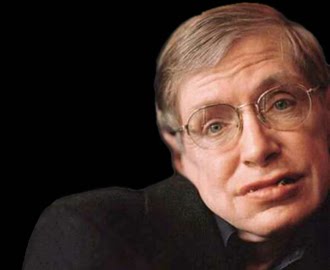
Very smart people can say things that make no sense.  For example, Stephen Hawking is reported to have written in his new book The Grand Design, "Because there is a law such as gravity, the universe can and will create itself from nothing. Spontaneous creation is the reason there is something rather than nothing, why the universe exists, why we exist. . ."  Because of this, a Creator God is redundant and unnecessary. 

Hawking is dealing with the deep question of why there is something rather than nothing. This question is more profound and troubling that it may first appear.  If something--anything--exists, then we are forces to ask why it exists.  Things would be much simpler if nothing existed.  But since things do exist, what is the sufficient cause of everything?

Hawking's book doesn't come out until next week, but for now let's look at some of the difficulties in the quotation above.  (1) It violates the law of non-contradiction to say that the universe created itself.  (2) If the laws of gravity exist, then it is not true that nothing exists.

First, Hawking states that the universe created itself.  This cannot be true because it violates the law of non-contradiction.  This law states that something cannot be both A and not-A at the same time and with the same meaning.  For example, a bird cannot be dead and not-dead at the same time and in the same way.  It can be both of these in different times and different ways, but not at the same time and in the same way.

So, in order for the universe to create itself it would have to exist and not exist at the same time and in the same way. Why? If the universe needs to be created, then it must not exist. This is obvious, because if it already existed at that time, then it didn't need to be created.  But if it doesn't exists, then it can't do anything since it isn't around to do anything.  Nothing can't do anything!  So for the universe to create itself, it would need to exist and not-exist at the same time and in the same way, which is impossible.

Second, Hawking states that the universe can create itself from nothing "[b]ecause there is a law such as gravity. . ."  But how does the law of gravity exist if nothing exists?  If the law of gravity exists, then how can someone say that nothing exists, since at least this law exists?  Is there a sufficient reason for this law to exist?  And even if the law of gravity exists--without anything at all to act upon--how does help get anything going at all?

If you are looking for reasons to push God out of your mind, you can take comfort in the fact that an incredibly smart person like Stephen Hawking has said that God isn't necessary.  But please be aware that for whatever reasons, very smart people can say things that make no sense.

September 1, 2010

Eric vs. the Volcano

Last year at school one kid from Eric's kindergarten class ot to bring home Eeyore the stuffed donkey. They were supposed to take some pictures and write about what they did over the weekend and bring it back the next week for the teacher to read to the class. This is what we wrote:


Today is Eric's seventh birthday, so I post these today in honor of him.
Related Posts Plugin for WordPress, Blogger...