September 30, 2010

Just Like Earth?


an artist's interpretation of the
newly discovered planet,
complete with visible oceans
(of which there is no evidence)
Are we alone in the universe?  Is earth nothing all that special?

There is an assumption by many naturalists that since there is life on earth, life must be easy to come by.  But for life to be easy to come by, you need planets that are at least potentially capable of developing life.  The problem is that we haven't found any.  Out of the 500 planets that have been found outside our galaxy, none of them have been found to be enough like earth to potentially support life.  Gas giants in close rotation to their stars just won't work. 

But it is now claimed that this this has all changed.  A planet "just like earth" has been found.

In a recent article AP science writer Seth Borenstein describes the recent discovery of a earth-like planet by astronomers R. Paul Butler and Steven Vogt.  The article states:
Astronomers say they have for the first time spotted a planet beyond our own in what is sometimes called the Goldilocks zone for life: Not too hot, not too cold. Juuuust right.

Not too far from its star, not too close. So it could contain liquid water. The planet itself is neither too big nor too small for the proper surface, gravity and atmosphere.

It's just right. Just like Earth.
Well, maybe not.  Before you head up to the roof to wait for the Vulcans to beam you up, let's think through some of the details in this particular article.  If anything, this is a good opportunity to notice how facts are sometimes presented in a way to lead people to a conclusion that is assumed ahead of time.  For example, in this article there are a few things that you might find strange. 

Strange comparison

Just like earth?

This new planet is three times the mass of earth and much closer to its star.  While earth is 93 million miles away from our yellow star, this planet is 14 million miles away from Gliese 581, a red dwarf star.  The planet, "g" orbits Gliese 581 every 37 days.  Because it is so close to the star the planet's orbit is locked so that it does not rotate.  One side is constantly exposed to the sun with estimated temperatures, according to this article, of 160 degrees and the other side always away from the sun with temperatures of negative 25. This means that the best chances life supporting temperatures and for liquid water--if there is any water--would be at the thin rim between the permanent-night half and the permanent-day half... just like earth.

In The Privileged Planet, Guillermo Gonzalez and Jay W. Richards point out many of the problems for a planet with a close orbit around a M dwarf star, the coolest type of dwarf stars.  The dark side of the planet would act as a cold trap "not unlike cold traps used in vacuum pump systems to extract water from the air" and would eventually trap and freeze all the water--if there was any--on the planet's cold dark side, leaving the bright side hot and dry (133-4).  The thin rim between the two halves would experience indirect and weak starlight which would only leave a potential for very weak biological productivity.  Further, M dwarf stars exhibit flares just like our sun.  Fortunately for us, we are 93 million miles away rather than only 14 million miles away. 

Strange math

Out of the other 500 planets outside of our solar system that have been found, this is the first one that seems to be somewhere in the habitable zone.  Yet the article later states that, "Vogt and Butler ran some calculations, with giant fudge factors built in, and figured that as much as one out of five to 10 stars in the universe have planets that are Earth-sized and in the habitable zone."  That is 10 to 20% of all stars!  Yet none of the other 500 planets discovered so far are potentially habitable. 

These astronomers seem more influenced by the "Principle of Mediocrity" than by actual data on hand.  The Principle of Mediocrity is the assumption that earth is a fairly ordinary planet orbiting a fairly ordinary star, thus there must be a countless number of life supporting planets out there as well.  On the contrary, others such as Peter Ward and Donald Brownlee, the authors of Rare Earth, discuss the multitude of factors that are needed for a planet to be even potentially life-supporting.  These include everything from being the right distance from the right star, in the right part of the right type of galaxy, with the right mass, plate tectonics, a large moon, liquid water, the right tilt, the right atmosphere, the right amount of giant impacts, and many more.  If any of these have a factor of zero, the chances for potential life to develop on that planet is zero.  Factored together, the odds are so miniscule that even with billions of galaxies with billions of stars, we should be surprised that there is even one planet in the universe that is capable of supporting life. 

Yet according to Vogt and Butler's calculations the odds are 10 to 20% for each star.  Perhaps the "giant fudge factors" had something to do with that?  Magic fudge, after all, is the essential ingredient for life.

Strange optimism

These astronomers deeply want to believe that earth-like planets are common and that life evolves easily.  If not, that might seem to suggest some sort of intelligent designer for the planet earth and human life, and that is not a popular option in some circles. 

Here is the most amazing part of the article.  You don't need the Hubble telescope to see the galaxy-size presupposition in this paragraph:
It's unknown whether water actually exists on the planet, and what kind of atmosphere it has. But because conditions are ideal for liquid water, and because there always seems to be life on Earth where there is water, Vogt believes "that chances for life on this planet are 100 percent."
This astronomer is actually telling us that if there is water there is a 100% chance there will be life.  That means that if there is water, there is 0.00% chance of not finding life!  Why?  Because there seems to be life everywhere on earth where there is water, of course. 

And as Vogt is quoted as saying, ""It's pretty hard to stop life once you give it the right conditions."

You see, once you start with the assumption that there is no intelligent designer, then since life does exist we know that it must be easy to come by.  The logic is as tight and circular as this planet's orbit around Gliese 581.

Also notice that the artist's rendering of planet g shows it complete with oceans.  I've seen some news reports now that haven't even mentioned that this is merely an artist's interpretation.  It gives people the impression that we've actually been able to see the planet through a telescope.  That isn't the case.  Astronomers detect these planets by noticing the periodic dimming of the star because of the planet passing in front of it blocking some of the light. 

Keep Looking

In April of 2007 Gliese 581c, another planet orbiting this same star, was hailed as an earth like planet in the Goldilocks zone.  However it was later concluded that planet c would have runaway greenhouse conditions like Venus, making it an impossible host for life.  The conclusion about planet g might end up the same.  But if and when that happens, I doubt that it will make any headlines.  (Do you remember any headlines when planet c was discredited?)  All of this leaves the public with the impression that earth like planets are a dime a dozen. 

Let's keep looking to see what can be discovered, but don't assume ahead of time that earth is not something special.

September 2, 2010

Universe, Create Thyself

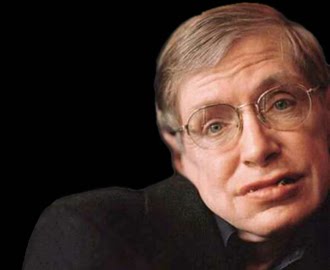
Very smart people can say things that make no sense.  For example, Stephen Hawking is reported to have written in his new book The Grand Design, "Because there is a law such as gravity, the universe can and will create itself from nothing. Spontaneous creation is the reason there is something rather than nothing, why the universe exists, why we exist. . ."  Because of this, a Creator God is redundant and unnecessary. 

Hawking is dealing with the deep question of why there is something rather than nothing. This question is more profound and troubling that it may first appear.  If something--anything--exists, then we are forces to ask why it exists.  Things would be much simpler if nothing existed.  But since things do exist, what is the sufficient cause of everything?

Hawking's book doesn't come out until next week, but for now let's look at some of the difficulties in the quotation above.  (1) It violates the law of non-contradiction to say that the universe created itself.  (2) If the laws of gravity exist, then it is not true that nothing exists.

First, Hawking states that the universe created itself.  This cannot be true because it violates the law of non-contradiction.  This law states that something cannot be both A and not-A at the same time and with the same meaning.  For example, a bird cannot be dead and not-dead at the same time and in the same way.  It can be both of these in different times and different ways, but not at the same time and in the same way.

So, in order for the universe to create itself it would have to exist and not exist at the same time and in the same way. Why? If the universe needs to be created, then it must not exist. This is obvious, because if it already existed at that time, then it didn't need to be created.  But if it doesn't exists, then it can't do anything since it isn't around to do anything.  Nothing can't do anything!  So for the universe to create itself, it would need to exist and not-exist at the same time and in the same way, which is impossible.

Second, Hawking states that the universe can create itself from nothing "[b]ecause there is a law such as gravity. . ."  But how does the law of gravity exist if nothing exists?  If the law of gravity exists, then how can someone say that nothing exists, since at least this law exists?  Is there a sufficient reason for this law to exist?  And even if the law of gravity exists--without anything at all to act upon--how does help get anything going at all?

If you are looking for reasons to push God out of your mind, you can take comfort in the fact that an incredibly smart person like Stephen Hawking has said that God isn't necessary.  But please be aware that for whatever reasons, very smart people can say things that make no sense.

September 1, 2010

Eric vs. the Volcano

Last year at school one kid from Eric's kindergarten class ot to bring home Eeyore the stuffed donkey. They were supposed to take some pictures and write about what they did over the weekend and bring it back the next week for the teacher to read to the class. This is what we wrote:


Today is Eric's seventh birthday, so I post these today in honor of him.

August 8, 2010

A Long Time Ago...

Today is our twelfth wedding anniversary, and why yes, we did have Han Solo and Princess Leia on the top of our wedding cake.

Hope also agreed to walk down the aisle to the Throne Room March from the end of Star Wars: A New Hope.  Wow, I love her!

August 5, 2010

When Do Children Do the Best?

This week a United States district court ruled against California’s Proposition 8 which specified marriage as being between one man and one woman. Among other problematic statements, the court asserted in it’s “finding of facts” that “Children raised by gay or lesbian parents are as likely as children raised by heterosexual parents to be healthy, successful and well-adjusted. The research supporting this conclusion is accepted beyond serious debate in the field of developmental psychology” (finding #70, p. 95). This is a misleading and incorrect assertion.  Children with same-sex parents are statistically much more prone to have behavioral and psychological problems compared to children being raised by two biological parents.

Numerous studies have consistently shown that children do best when being raised by two biological parents.  This is documented “not in tens or hundreds but in thousands of published studies over the past decades.”1 For example, Timothy J. Biblarz and Greg Gottainer in the Journal of Marriage and the Family report that “Evidence over the past 30 years shows that children raised in single-parent households generally have lower average levels of psychological well-being and socioeconomic achievement than those raised by two biological parents.”Sociologist James Q. Wilson wrote, “Almost everyone—a few retrograde scholars excepted—agrees that children in mother-only homes suffer harmful consequences: the best studies show that these youngsters are more likely than those in two-parent families to be suspended from school, have emotional problems, become delinquent, suffer from abuse, and take drugs.” Although some of the difference can be explained by income, “[T]he rest of the difference is explained by a mother living without a husband.”3

Same-sex advocates often point to a 2002 technical report made by the American Academy of Pediatrics which stated that, “a growing body of scientific literature demonstrates that children who grow up with 1 or 2 gay or lesbian parents fare as well in emotional, cognitive, social, and sexual functioning as do children whose parents are heterosexual.”4  However, this report produced by an eight-member committee received the strongest negative reaction from its members on any issue. The report also cautioned that, “The small and non-representative samples studied and the relatively young age of most of the children suggest some reserve.”

Importantly, although the AAP report states that these children do “as well as” children in heterosexual homes, the comparison is actually being made between children in same-sex households and “stepfamilies formed after heterosexual couples divorce”.5 Thus it is highly misleading to give the impression that children raised in same-sex households do as well as children raised with their biological mother and father.

There are exceptions, but unfortunately stepfamilies are statistically associated with a host of serious behavioral and emotional problems, equal to or greater than the problems of children in single-parent families. One researcher concluded, “The best strategy for dealing with them is to do everything possible to minimize their occurrence.”6 Judith Wallerstein, in her twenty-five-year study concluded that children from divorced and remarried families are more aggressive toward parents and teachers, experience more depression, have more learning difficulties, have more problems with their peers, are two to three times more likely to be referred for psychological help, more often end up in mental health clinics and hospital settings, have earlier sexual activity, more children out of wedlock, less marriage, and more divorce.7

If children raised in homes with same-sex parents “closely resemble stepfamilies formed after heterosexual couples divorce” this does not indicate a healthy environment for these children. On the contrary, the sharp difference between stepfamilies/same-sex families and families with intact biological parents is so striking that the AAP report actually confirms that strengthening heterosexual marriage is in the best interest of children. We must remember, “It is not just marriage between any two adults that benefits children, but the marriage of their own mothers and fathers.”8

Since it is to the benefit of society for marriages to be strong since children do best in all aspects of life when raised by their natural father and mother, it would be wrong for society not to treat these unions specially. As Allan Carlson comments:

To extend the same honor and special benefits [of marriage] to gay and lesbian couples (or, by logical extension, to bisexual arrangements and ‘polyamorous’ households) undoes, by definition, the very point of granting special status. If all group living arrangements enjoy equal ‘honor’ and ‘special benefits,’ then no arrangement has recognizable honor or special status. And in this case, the only proven, effective incubator of new and healthy human life would be cast aside as merely another lifestyle choice.9
Although advocates of same-sex marriage insist that same-sex marriage would not devalue heterosexual marriage, James Spiegel likens this to giving the purple heart to all military personnel who see battle, not just those who are wounded or killed. Whatever the intent, this would necessarily devalue the special significance of the Purple Heart. Spiegel argues that to deny the special social value of what has special social value is unjust; therefore, gay marriage is unjust.10 There is something special about the time-honored arrangement of marriage as being a man and a woman. We are not doing children or our country a service by devaluing it.

1 Glenn T. Stanton and Bill Maier, Marriage on Trial: The Case Against Same-Sex Marriage and Parenting (Downers Grove, IL: InterVarsity Press, 2004), 73.
2 Timothy J. Biblarz and Greg Gottainer, “Family Structure and Children’s Success: A Comparison of Widowed and Divorced Single-Mother Families,” Journal of Marriage and the Family 62 (May 2000): 534.
3 James Q. Wilson, “Why We Don’t Marry,” City Journal, Winter 2002, < http://www.city-journal.org/html/12_1_why_we.html>
4 Ellen C. Perrin, “Technical Report: Coparent and Second-Parent Adoption by Same-Sex Parents,” Pediatrics 109, no. 2 (2002):341.
5 Perrin, “Technical Report,” 341.
6 David Popenoe, quoted in Stanton and Maier, Marriage on Trial, 83.
7 Judith Wallerstein, quoted in Stanton and Maier, Marriage on Trial, 86.
8 Stanton and Maier, Marriage on Trial, 109. Emphasis added.
9 Allan C. Carlson, Conjugal America: On the Public Purposes of Marriage (New Brunswick, NJ: Transaction Publishers, 2007), 112. Carlson also states, “. . . public policy on marriage must be built on this ideal family structure, and not on some lowest common denominator” (44).
10 James S. Spiegel, “Why Gay Marriage is Unjust,” Paper delivered at the National Meeting of the Evangelical Philosophical Society, New Orleans, Louisiana, November, 2009.
Related Posts Plugin for WordPress, Blogger...